USCG Documentation vs. State Title: Which one does your boat need?
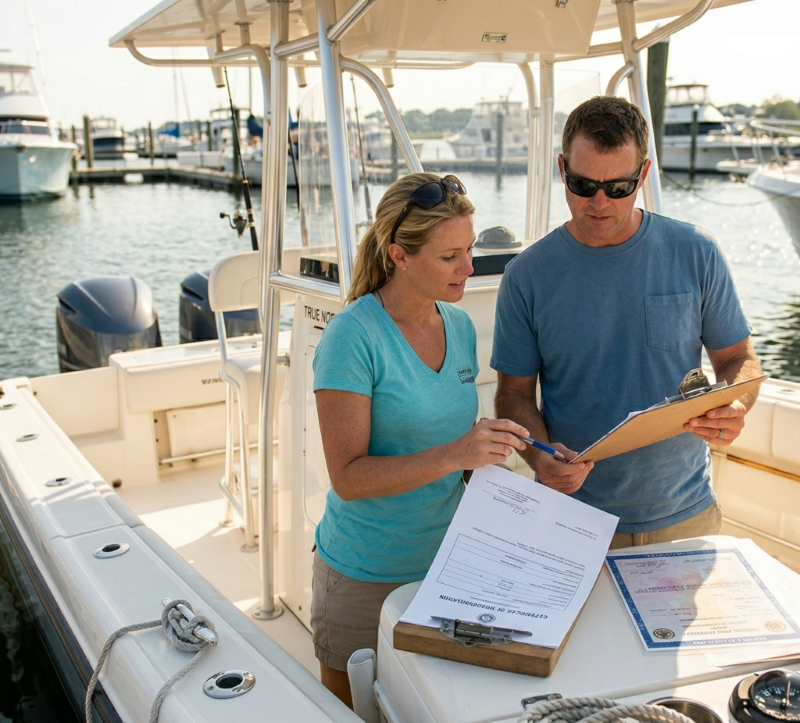
When you acquire a new boat, ensuring it is properly registered is a top priority. However, owners often face a choice between two distinct paths: U.S. Coast Guard (USCG) Documentation and State Title.
While both identify your vessel, the right choice depends on your boat's size, how you use it, and your financing needs. Understanding these differences is key to staying legally compliant and enjoying peace of mind on the water.
What is US Coast Guard Documentation?
USCG Documentation is a federal form of registration that dates back to the early days of the United States. It serves as a national form of title for qualifying vessels and is an alternative to state-level titling.
- Who Qualifies: It is available for recreational vessels that are at least five net tons and owned by a U.S. citizen. Generally, boats 26 feet or longer meet this weight requirement. (Note: All commercial vessels must be federally documented).
- How it Works: A documented vessel receives:
- An Official Number: A unique, permanent ID number etched into an interior part of the hull.
- A Certificate of Documentation (COD): The official document must be kept on board at all times.
- No State Bow Numbers: Generally Documented vessels do not sidplay state registration numbers (though some states still require a "cruising permit" or tax sticker).
- Name and Hailing Port: The vessel’s name and its hailing port must be clearly marked on the hull, typically on the stern
- Superior Lien Protection : Lenders prefer USCG Documentation because it allows for a Preferred Marine Mortgage. This federal filing offers stronger protection for the bank than a state-recorded lien, often resulting in better financing terms.
- International Travel: It provides conclusive proof of nationality, making it much easier to clear customs in foreign ports.
- Clear Chain of Title: The federal registry provides a robust, centralized record of ownership history, simplifying future sales.
What is State Title?
State Title is the most common form of boat identification and is managed by state agencies like the DMV or Department of Natural Resources (DNR).
- Who Needs It: Almost all recreational boats operating in state waters must be state-titled and registered unless they are USCG documented. This includes PWCs, dinghies, and small fishing boats.
- How It Works: When you title a boat with the state, you receive:
- A Certificate of Number: Your registration card, which must remain on the boat.
- Registration Decals: Numbered decals that must be displayed prominently on both sides of the bow.
- Physical Title: Similar to a car title, this serves as proof of ownership and is where a lender's lien is recorded.
Can a boat be Both?
Generally, no—a recreational boat is either state-titled or federally documented, but not both at the same time. If your boat qualifies for USCG Documentation and you choose to document it, it is typically exempt from displaying state registration numbers. However, a few states—such as New Jersey—still require a state title even for documented vessels. Always check with your local agency to confirm the specific requirements in your state.
Which is right for you?
- For smaller boats (under 26 feet or 5 net tons): State title and registration are usually your only option and perfectly sufficient for local and coastal use.
- For larger boats (26 feet or longer, and over 5 net tons): USCG Documentation is often the preferred choice. It simplifies financing, protects your lender and offers a clearer chain of title. It also simplifies international travel.
Both State Title and USCG Documentation are essential for legal boat ownership. Understanding their differences helps you choose the right path for your vessel, ensuring its properly identified, legally compliant and easily financeable for years to come while avoiding surprises during a sale, refinance or inspection. Making your time on the water smooth, stress free and all about adventure.
Revised and Published: 5/13/2026
